Visit Hindu Temple Rituals: How to Observe Sacred Customs
"The sea meets the stone, and the ritual begins where the tide touches the shore."
Key takeaways: 1. Understand the timing of rituals like Melasti. * Respect the sacred boundaries of seaside temples. * Observe proper etiquette during prayer ceremonies.
How to time a Visit Hindu Temple Rituals?

A traveler stands at the edge of a stone courtyard, watching the sun dip toward the horizon as incense smoke drifts through the air. Timing is essential when trying to witness specific spiritual events in Bali.
This specific timing ensures that the community gathers to purify themselves before major holidays.
Travelers seeking to witness these moments must check local lunar calendars to ensure they arrive during the correct window.
How do I follow the sacred customs? A visitor walks quietly along a stone path, stepping carefully to avoid disturbing a local family in prayer. Understanding the atmosphere is the first step to a meaningful visit.
When visiting a sacred site, observing sacred customs means maintaining a quiet demeanor and dressing modestly to honor the local culture. It is vital to remain at a respectful distance from the main altar during active ceremonies.

This prevents interference with the spiritual focus of the practitioners while allowing for a peaceful observation of the traditions.
How to participate in puja effectively?
A person holds a small flower offering, waiting for the right moment to place it on a stone pedestal. Participating in a ritual requires both intention and knowledge of local etiquette.
To participate in puja effectively, follow these three steps: 1. Approach the offering area with hands held together in a prayer position to show respect. 2. Place the floral offering gently on the designated altar or pedestal. 3.
Bow slightly toward the deity or the priest to acknowledge the sanctity of the space.
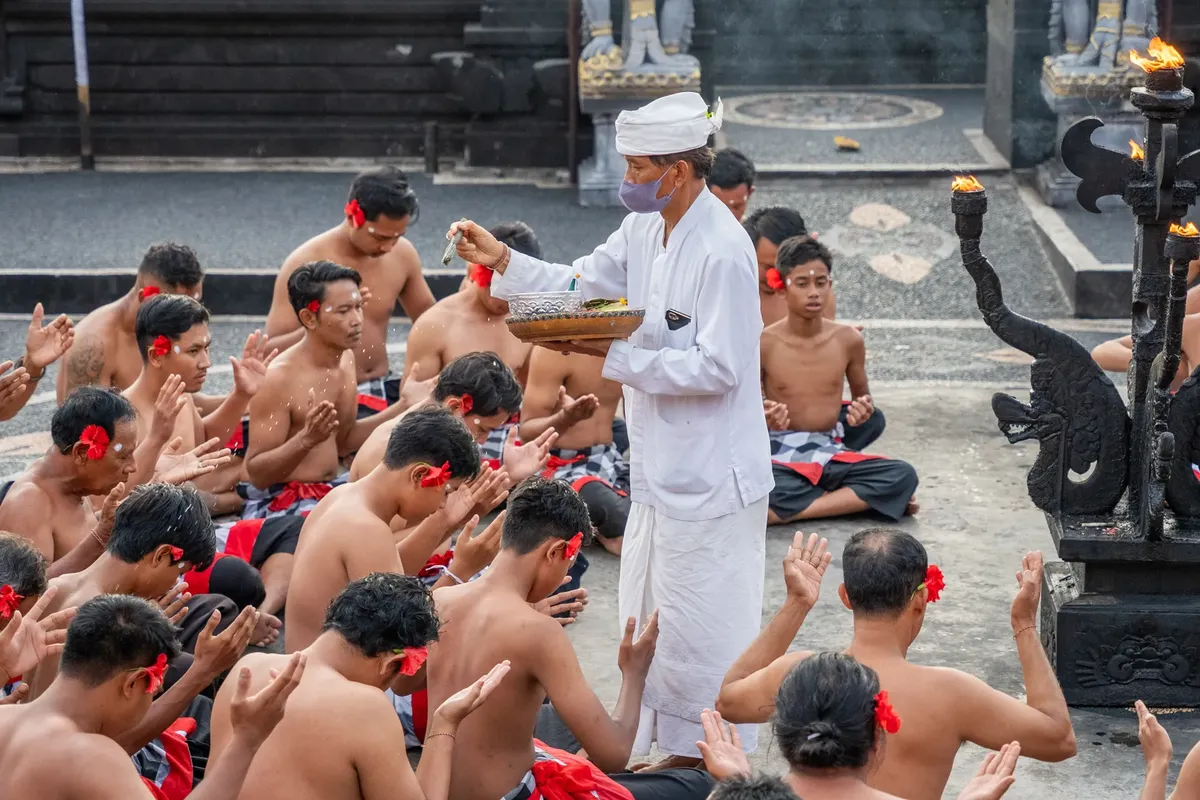
I remember watching a small group of locals carefully arrange jasmine flowers before the ceremony began, which taught me the importance of patience. Always wait for a local guide or priest to signal when it is appropriate to move closer to the ritual space.
What is the proper temple dress code? A traveler adjusts a sarong around their waist, feeling the fabric against their skin as they enter the temple gates. Proper attire is a non-negotiable requirement for entry into any holy site in Indonesia.
The temple dress code rules require that both men and women cover their legs, typically by wearing a traditional sarong and a sash. Shoulders should also be covered to maintain modesty.
Wearing these items is not just about rules; it is a way to show respect to the community and the divine presence within the temple walls.
Can I visit during any season?
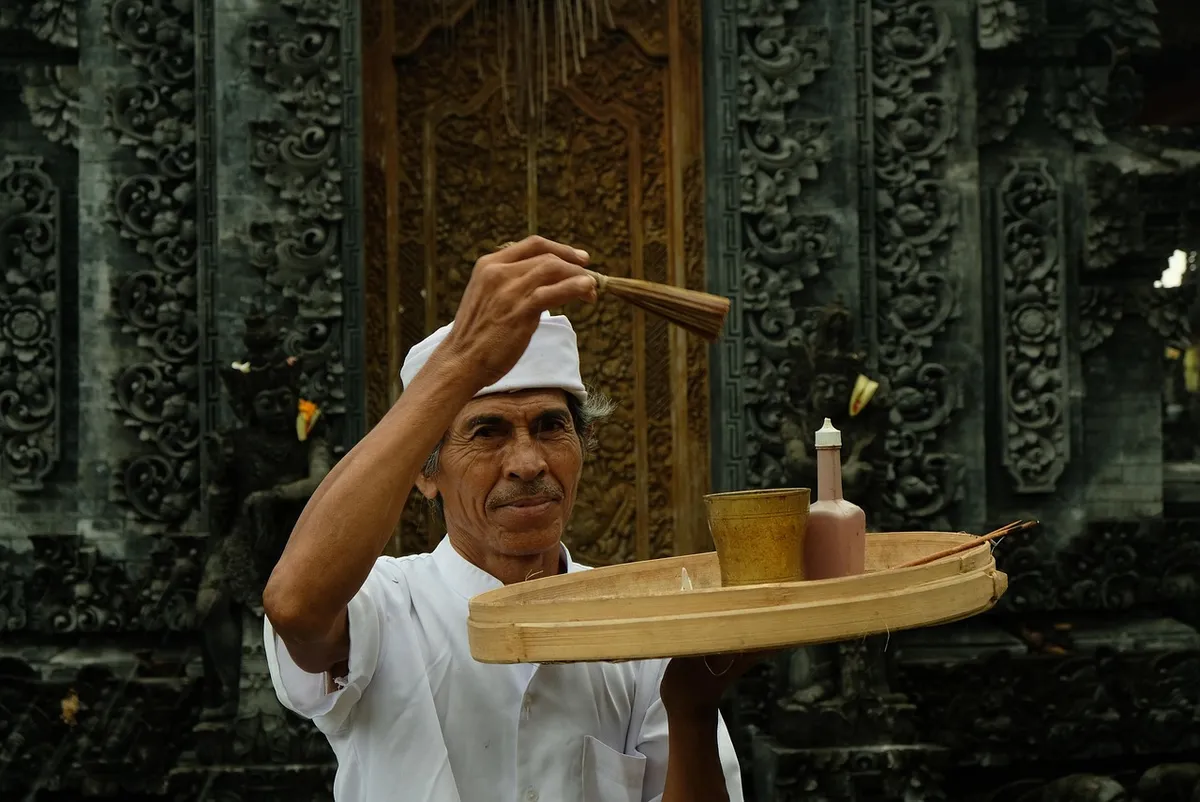
The wind picks up near the coast, blowing sand across the temple entrance as the tide rises. While temples are often accessible, certain rituals are tied to specific environmental and religious conditions.
According to World Bank data, Indonesia recorded international tourist arrivals of 4,053,000 in 2020.
A limitation of visiting during specific ritual windows is that the timing is often dictated by the lunar calendar and local sea conditions, meaning schedules can change. If a ritual is tied to the coastline, weather or tide levels may impact accessibility.
- To properly experience the spiritual essence of a Nusa Penida Hindu temple, visitors must respect local timing and sacred boundaries during traditional ceremonies.
- This guide covers the timing of specific rituals, essential etiquette for observing sacred customs, and how to participate in puja effectively.
- The Melasti ritual is performed 3–4 days beforehand, within Hindu temples near the sea and beaches.
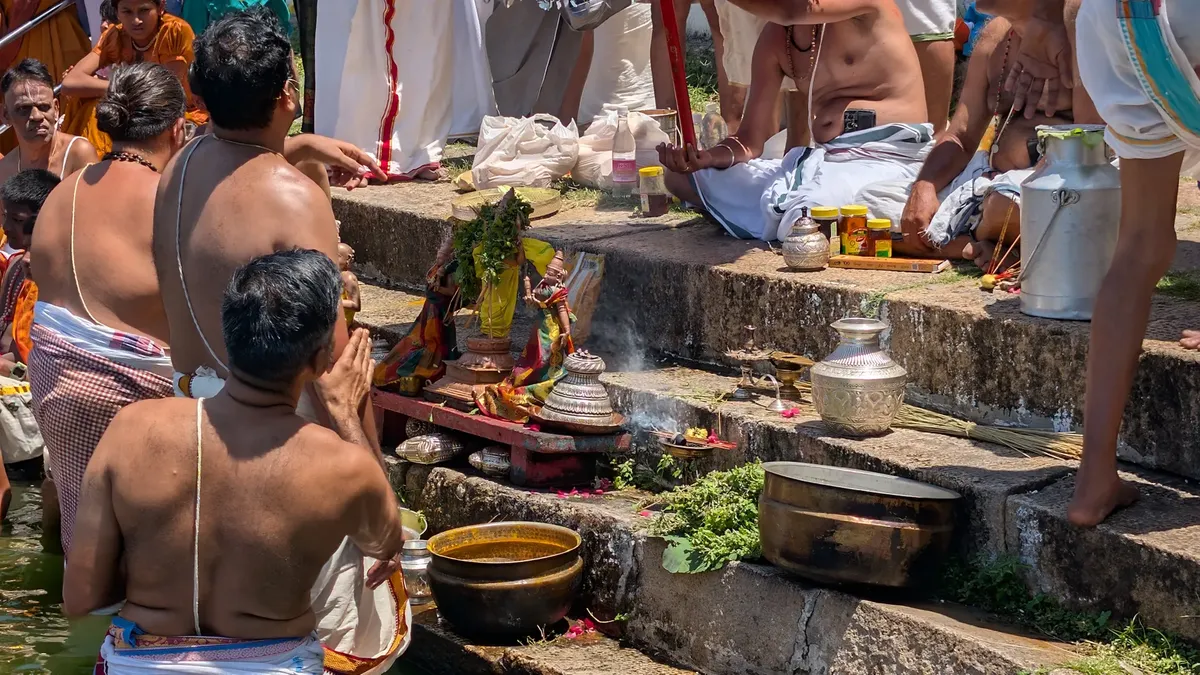
The subject here is Visit Hindu Temple Rituals.
The same subject is also called Temple Prayer Experience.
The same subject is also called Sacred Ritual Guide.
The same subject is also called Worship Site Visit.
The same subject is also called Temple Ceremony Etiquette.
Related
- Bali Hindu temple travel: Why visit temples in Denpasar
- Balinese Hindu temple visit: Find charm in history
What precautions should travelers take regarding the environment?
Travelers must consider how the sea meets the stone when planning their approach to coastal temples. Because the Melasti ritual occurs near the sea and beaches, the tide levels can change the accessibility of the ritual space.
According to the Nature Conservancy Coral Triangle Center, marine conservation is considered extremely important to sustaining future levels of tourism on the island.
If the tide rises, the path to the stone courtyard might become difficult to navigate.
When the tide is high, the ritual space might be affected by the water. Visitors should check the local sea conditions to ensure they can safely reach the temple area. If the environment changes, the timing of the ritual might shift accordingly.
How to manage the transition between the shore and the temple?
Moving from the shore to the temple requires careful attention to the environment. The ritual timing is often tied to the sea, so the transition between the beach and the stone structures is a key part of the experience.
- Monitor the tide levels to ensure the path to the temple remains clear. 2. Check the lunar calendar to align the visit with the correct ritual window. 3. Observe the local sea conditions before attempting to reach the coastline.
What if I am unsure about the local customs?
If a visitor is uncertain about the specific customs, they should observe the local practitioners first. The quiet observation of the community provides the clearest understanding of the required deference. This silent study allows a traveler to absorb the unspoken rules governing the sacred space.
- Observe the sequence of actions performed by the locals. 2. Note the attire and demeanor of the practitioners. 3. Allow the visual information to guide subsequent respectful behavior.
This observational approach is the safest way to ensure that one does not inadvertently disrupt the solemnity of the proceedings near the sea meets the stone.






Comments 0