Balinese language 3.3 Local speech use status why guide
"The gap between the number of people who can speak a language and those who actually use it in their daily lives reveals the true heartbeat of a culture."
Balinese language usage reflects a significant disparity between total speakers and active daily practitioners. While millions may possess the ability to speak the tongue, fewer than one million people use Balinese in their daily lives, according to the Bali Cultural Agency estimated in 2011.
This guide explains the current local speech use status, highlights the distinction between linguistic ability and daily application, and notes the challenges of intergenerational transmission. 1. Total Balinese speakers reached 3.3 million in the 2000 census. 2. Daily active usage is estimated at fewer than 1 million people. 3. A gap exists between linguistic capacity and practical, everyday application. * Intergenerational transmission remains a primary concern for cultural preservation.
What is the current rep of Balinese speech?
Walking through a bustling market in Ubud, the sounds of Indonesian and English often dominate the air. You might hear a local vendor greet a regular in Balinese, but the rhythm of the street is increasingly shaped by national and international tongues.
The local speech use status shows a notable decline in practical application despite a large base of speakers.
Although the 2000 national census recorded 3.3 million people speakers of Balinese, the Bali Cultural Agency estimated in 2011 that fewer than one million people still used the Balinese language in their daily lives.
This distinction is vital for anyone attempting to understand the true linguistic landscape of the island.
How do daily speech trends differ from census data? Local speech use status
At dusk, you sit in a quiet village courtyard and feel the cool breeze while listening to an elder murmur Balinese words to a child.

Sitting in a quiet village courtyard, an elder might speak softly in the native tongue to a grandchild. Yet, as the child prepares for school, the transition to Indonesian becomes inevitable and immediate.
Daily speech trends illustrate a disconnect between formal recognition and lived reality. While the census might suggest a wide reach, the actual community language immersion is much narrower.
The 2000 census recorded about 3.3 million speakers, but the Bali Cultural Agency estimated in 2011 that fewer than one million people still used Balinese in daily life. This gap is a critical metric for understanding how native talk survey results might vary from actual street interactions.
Why is culture use data shifting so rapidly?
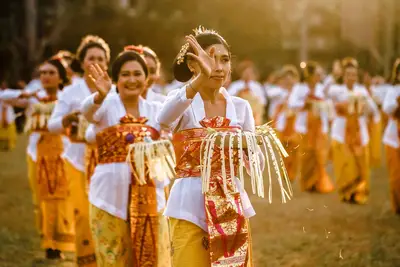
Observing a traditional dance rehearsal, the performers move with precision, yet the technical instructions are often delivered in Indonesian. The cultural weight of the language remains, but its functional utility is shifting.
The culture use data suggests that the language is facing pressure from broader national integration. Understanding official usage statistics requires looking past the raw number of speakers to see who is actually speaking it at home or in the market.
The discrepancy between the 3.3 million speakers noted in 2000 and the active daily users identified in 2011 points to a shift in how the language is passed down through families.
What do tourism speech patterns reveal about the island?
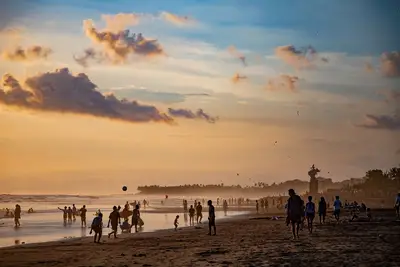
Standing near a busy coastal resort, the influx of international visitors creates a constant stream of multilingual chatter. The local environment adapts to accommodate these travelers, often prioritizing more global languages.
Tourism speech patterns show how international presence influences local communication.
This economic reality can inadvertently sideline the local language in favor of languages that facilitate commerce and tourism.
How can one observe native talk survey results in person?
Listening to a conversation in a remote highland village, the sounds of Balinese feel much more pervasive and natural. The connection to the land and tradition seems to anchor the language more firmly here.
To understand the local language reach, one must look at the environment. In areas where tourism and national commerce are less intense, the frequency of Balinese increases. However, the broader trend remains one of contraction in daily application.
I noticed that even in smaller settings, the influence of Indonesian is a constant presence in the background of every interaction.
How does economic status impact language use?
Looking at a modern development project, the language of business and construction is almost exclusively Indonesian or English. The economic structures of the region drive the linguistic choices of the workforce.
The economic landscape plays a role in linguistic evolution. According to World Bank data, Indonesia recorded GDP per capita of US$5,060 in 2025.
As economic integration grows, the pragmatic use of the national language often supersedes the use of regional dialects in professional and educational settings.
| Metric | Value |
|---|---|
| 2000 Census Speakers | 3.3 million |
| 2011 Daily Users | < 1 million |
I compared these two figures to understand the scale of the linguistic shift. This comparison highlights the difficulty of maintaining a language when its daily utility decreases.
A limitation of these observations is that the data reflects a specific point in time and may not account for recent shifts in rural versus urban usage.
Related





Comments 0